

Growing Tropical
Hibiscus from Seed
Everything you need to know to prepare the seed, sow, and and sprout your own tropical hibiscus — from the very first seed to a stunning, one-of-a-kind flower.
Why grow from seed?
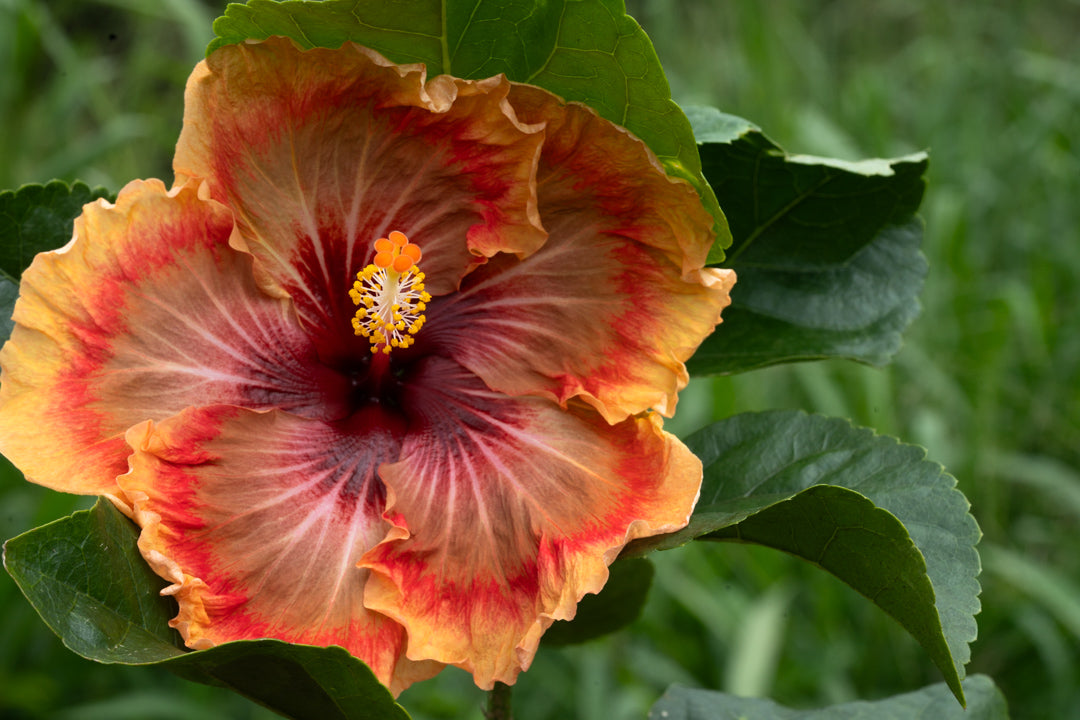
Growing tropical hibiscus from seed is one of the most rewarding things you can do as a plant lover. Unlike cuttings or grafted plants, every seed-grown hibiscus is genetically unique — which means there's always a chance you'll produce a bloom the world has never seen before.
It takes patience, but the payoff is worth it: lush, dinner-plate blooms in vivid reds, pinks, oranges, and corals, often with dramatic contrasting eyes and ruffled petals.
What you'll need
Purchasing your seeds from known hybridizers is highly reccomended. Avoid vague online accounts, they often send seeds that are not tropical hibiscus.
Step-by-step
Lightly nick or sand the rounded part of the hard outer coat with a nail file, sandpaper or a knife. This allows water to penetrate, dramatically improving germination rates.
Plant ¼ inch deep in moist seed-starting mix. Use one seed per cell or small pot for best results.
Hibiscus seeds germinate best at 75–85°F (24–29°C). A heat mat placed under the tray speeds things up significantly.
Mist regularly to keep soil evenly damp — not waterlogged. Cover with a humidity dome or plastic wrap to retain moisture.
Once sprouts appear (typically 7–21 days), remove the cover and move to bright light. Give each seedling space and watch them take off. Pot them up as appropriate.
If you purchased your seeds from a reputable source they will send you the parentage of each seed. They are labeled with the mother and the father plant in this format "PODPARENT x POLLEN PARENT".
Label each pot the moment you plant — variety name, date, and anything else you want to track. When that first bloom opens months later, you'll want to know exactly what you grew.
Share: